

The creator economy offers immense opportunities, but navigating the vast sea of platforms to find your perfect fit can be a significant hurdle. The decision is critical: the right platform acts as a launchpad for your business, while the wrong one can stifle growth with high fees, poor discoverability, or a feature set that doesn't match your content style. A novelist on Substack has different needs than a course creator on Kajabi, and an artist selling prints on Gumroad requires a different toolkit than a membership-based community on Patreon.
This guide is designed to eliminate the guesswork. We provide a comprehensive, user-focused roundup of the best platforms for content creators, breaking down exactly what each service offers. You'll get a clear, direct comparison of monetization models, fee structures, audience engagement tools, and the specific type of creator who thrives on each one. From digital downloads and subscriptions to online courses and e-commerce, we analyze the top contenders to help you build a sustainable and profitable brand.
Each entry includes actionable insights, screenshots for a real-world look at the interface, and direct links to get you started immediately. We skip the generic advice and focus on the practical details that matter. Whether you are launching a new venture or migrating an existing one, this list will help you select the ideal foundation to connect with your audience and turn your passion into a profession. Consider this your roadmap to finding a digital home that truly supports your creative and financial goals.
1. Patreon: For Membership-First Monetization
Patreon has established itself as a cornerstone for creators looking to build a stable, predictable income directly from their audience. Its model revolves around recurring fan support, making it one of the best platforms for content creators who want to offer exclusive content and community access through memberships. It's an ideal choice for podcasters, visual artists, writers, and YouTubers aiming to create a dedicated space for their most loyal followers, away from the unpredictable algorithms of social media.
The platform excels by providing an all-in-one solution. Creators can set up multiple membership tiers, each offering different perks like early access to content, behind-the-scenes updates, exclusive videos, and direct communication. This tiered structure incentivizes fans to subscribe at higher levels for greater access, fostering a deeper connection between the creator and their community.
Key Features and Monetization
Patreon’s strength lies in its comprehensive toolset designed to support a membership-first business.
- Flexible Memberships: Creators can offer both monthly and annual subscription plans, providing fans with options and encouraging long-term commitment.
- Digital Product Sales: Beyond subscriptions, Patreon allows creators to sell one-off digital products like ebooks, tutorials, or art files directly from their page, adding another revenue stream.
- Native Tools: The platform includes native video hosting for eligible creators, community chat features, polls, and robust analytics to help you understand your audience better. An optional "Merch for Membership" feature automates the creation and fulfillment of physical merchandise for your patrons.
Expert Tip: To maximize your earnings on Patreon, structure your tiers strategically. Start with a low-cost tier for basic access, then add tangible, high-value perks like exclusive Q&As, personalized feedback, or merchandise to higher-priced tiers. This creates a clear value ladder for your supporters.
Pricing and Platform Fees
Patreon’s fee structure is transparent. For creators who published their page after August 4, 2025, the platform takes a 10% fee on earnings. This is in addition to standard payment processing fees, which vary by transaction size and payment method.
It's also crucial to be aware of potential extra costs. If a patron subscribes through the Patreon iOS app, Apple will take an additional fee from the transaction. This is an important consideration for creators with a heavily mobile-based audience. While the fees are a factor, the platform's trusted brand name and seamless user experience often lead to higher conversion rates, justifying the cost for many.
| Feature Comparison | Patreon |
|---|---|
| Monetization Model | Recurring Memberships, Digital Products |
| Platform Fee (Post-Aug 2025) | 10% + processing |
| Best For | Podcasters, Artists, YouTubers, Writers |
| Unique Selling Point | Strong brand recognition, all-in-one tools |
While Patreon offers a centralized hub, creators should always prioritize their digital safety. For comprehensive strategies on safeguarding your personal information, our guide on how to protect your privacy online provides essential tips for any creator.
Website: https://www.patreon.com
2. Substack: For Direct-to-Inbox Monetization
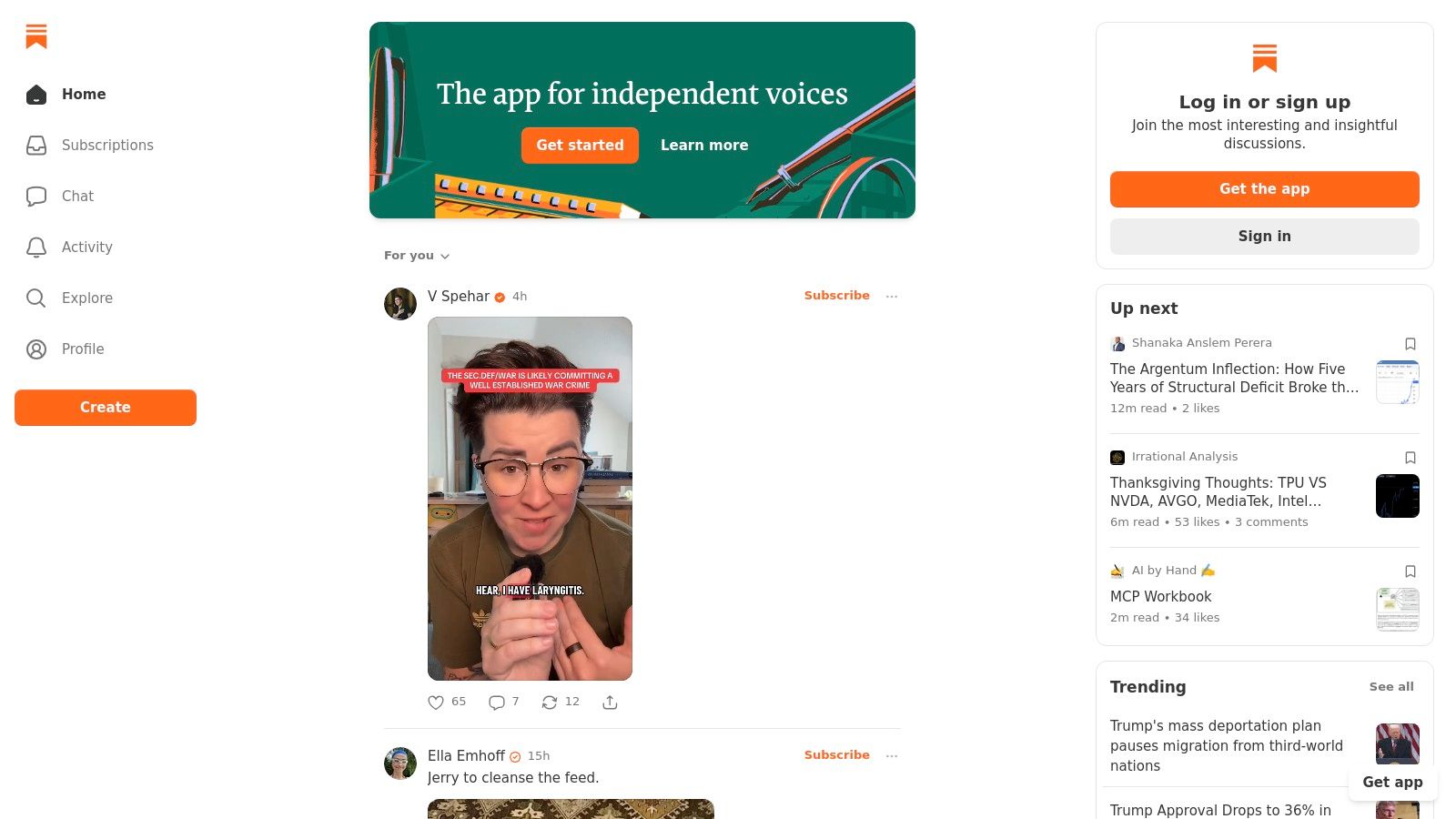
Substack has rapidly become the go-to platform for writers, journalists, and thought leaders who want to build a direct relationship with their audience through email newsletters. Its email-first model makes it one of the best platforms for content creators focused on written content, allowing them to monetize their work with paid subscriptions effortlessly. It's an excellent choice for creators who prioritize simplicity and want to own their audience list, free from the constraints of social media algorithms.
The platform's core appeal is its "all-in-one" approach to publishing and monetization. Creators can start a free publication, build an email list, and then seamlessly introduce a paid tier for exclusive posts, podcasts, or community features. This low-friction setup empowers writers to focus on creating valuable content while Substack handles the complex technical aspects of payments, hosting, and email delivery.
Key Features and Monetization
Substack’s feature set is intentionally focused on making publishing and earning simple.
- Integrated Paid Subscriptions: Turn on paid subscriptions with a single click. Substack uses Stripe to process payments, allowing you to offer monthly and annual plans to your readers.
- Built-in Discovery Network: The platform's recommendations feature helps creators grow by cross-promoting their newsletters to relevant audiences. The "Notes" feature also provides a social-media-like feed to foster engagement.
- Multimedia Support: Beyond text, you can host and distribute podcasts directly through your Substack, including options for subscriber-only audio content. You can also embed videos and other media within your posts.
- Custom Domains: For a one-time fee, you can connect a custom domain to enhance your brand's professionalism and ownership.
Expert Tip: Leverage Substack's free posts as a powerful marketing tool. Publish consistently high-quality free content to build trust and demonstrate your value, then use compelling calls-to-action to entice your most engaged readers to upgrade to a paid subscription for your premium analysis or exclusive community access.
Pricing and Platform Fees
Substack’s pricing model is straightforward: it’s free to publish until you enable paid subscriptions. Once you start charging, Substack takes a 10% platform fee from the revenue you generate. This is on top of Stripe’s payment processing fees, which are typically 2.9% + $0.30 per transaction.
While the 10% cut is significant, there are no monthly charges, making it a risk-free option to start building an audience. The reliance on Stripe also means you'll incur an additional Stripe Billing fee for recurring charges, so it's important to factor that into your financial projections. The platform’s strong deliverability and built-in growth tools often justify the costs for writers focused on scaling their readership.
| Feature Comparison | Substack |
|---|---|
| Monetization Model | Recurring Subscriptions (Newsletter/Posts) |
| Platform Fee | 10% + Stripe processing fees |
| Best For | Writers, Journalists, Experts, Podcasters |
| Unique Selling Point | Simplicity, powerful discovery network, direct audience ownership |
Mastering your pricing is key to success on a platform like Substack. For a deep dive into effective strategies, our guide on mastering subscription model pricing for growth offers valuable insights.
Website: https://substack.com
3. Gumroad: For Direct-to-Consumer Digital Sales
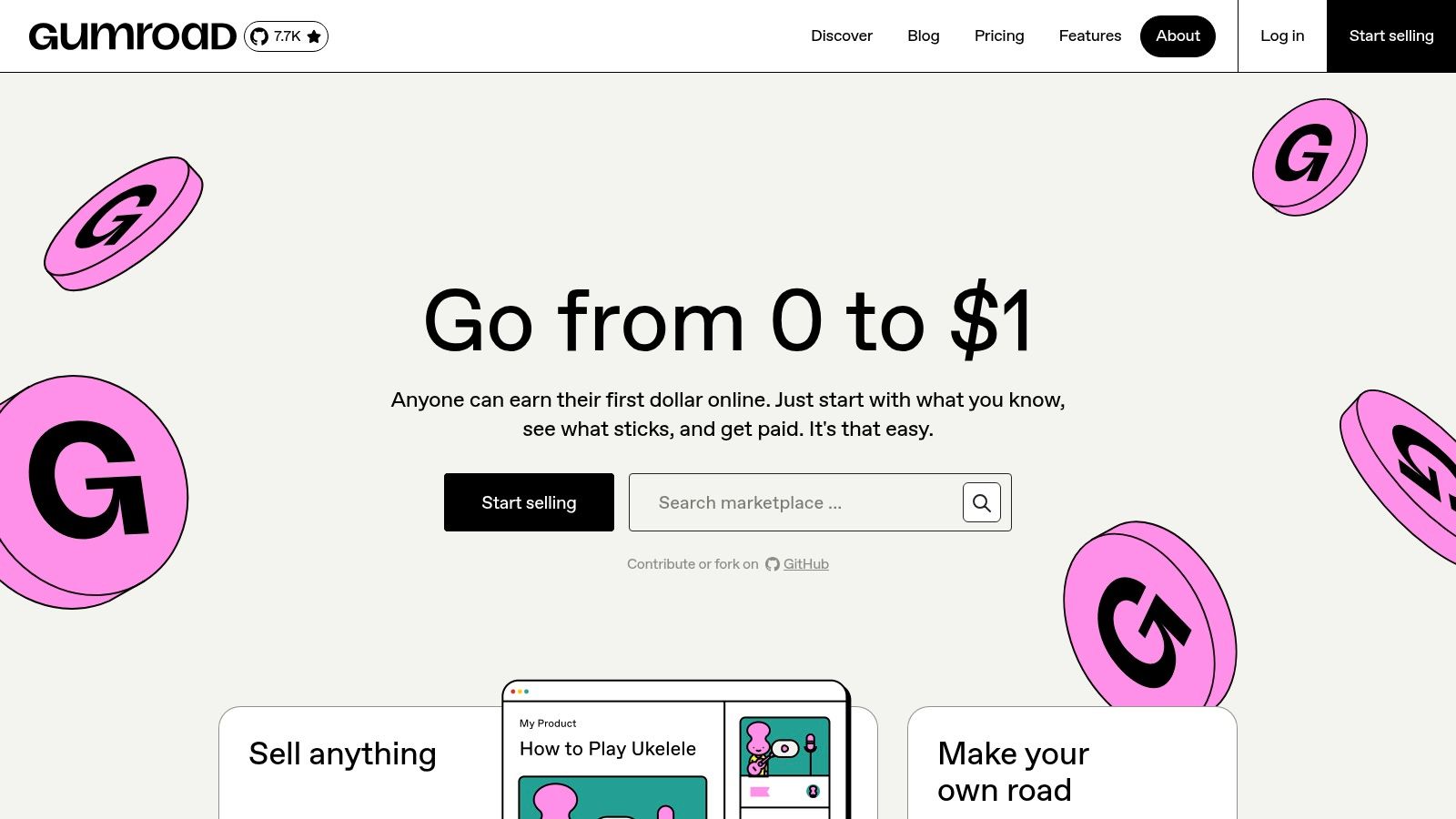
Gumroad has carved out a niche as the go-to platform for creators who want to sell digital products directly to their audience with minimal friction. It's a powerhouse for selling ebooks, courses, software, and memberships, making it one of the best platforms for content creators focused on one-off sales or simple subscriptions. If you want to launch a product quickly without the overhead of building a full e-commerce site, Gumroad provides an elegant and effective solution.
The platform's core appeal is its simplicity. You can create a polished, functional product page in minutes and start selling immediately. This ease of use is perfect for artists selling brush packs, developers selling code snippets, writers selling novels, and educators selling video tutorials. By focusing on the transaction, Gumroad lets you maintain control over your audience and product without getting bogged down in complex site management.
Key Features and Monetization
Gumroad's feature set is built for speed and efficiency, helping creators monetize their work with powerful, straightforward tools.
- Instant Product Pages: Sell almost any digital good, including files, courses, and subscriptions. The platform supports memberships, license keys for software, and various pricing models like "pay what you want."
- Built-in Marketing Tools: Gumroad includes features to create discount codes, run an affiliate program to incentivize others to promote your products, and build a simple email list.
- Merchant of Record (MoR): As of 2025, Gumroad acts as the Merchant of Record. This means it automatically handles the collection and remittance of global sales tax (like VAT), a significant administrative relief for creators selling internationally.
- Optional Discoverability: You can have your products featured on the Gumroad Discover marketplace, exposing your work to a new audience browsing the platform.
Expert Tip: Leverage Gumroad's "Workflows" feature to create automated email sequences. You can send a welcome series to new customers, offer upsells for related products, or deliver a multi-part course directly to their inbox, all without needing a separate email marketing service.
Pricing and Platform Fees
Gumroad uses a tiered fee structure based on your lifetime earnings, which rewards creators for their long-term success. The platform fee starts at 10% for new creators and decreases as you hit certain revenue milestones. This is in addition to standard payment processing fees from Stripe or PayPal.
A key point to note is that sales made through the Gumroad Discover marketplace incur an additional 10% fee. This is the cost for getting your product in front of their built-in audience. While the fees are competitive, it’s vital to factor them into your pricing strategy, especially if you anticipate a high volume of marketplace-driven sales.
| Feature Comparison | Gumroad |
|---|---|
| Monetization Model | Digital Products, Memberships, Courses |
| Platform Fee | 10% (decreasing with lifetime sales) + processing |
| Best For | Artists, Writers, Developers, Educators |
| Unique Selling Point | Simplicity, Merchant of Record tax handling |
While Gumroad simplifies selling, creators must remain vigilant against online threats. To enhance your security, our guide on how to avoid online scams and protect your data offers essential advice for safeguarding your digital storefront.
Website: https://gumroad.com
4. Ko-fi: For Low-Friction Tipping and Simple Commerce
Ko-fi has carved out a niche as the friendly, approachable platform for creators who want to receive direct financial support without the commitment of a full membership model. It started with a simple concept: "buy a creator a coffee." This makes it one of the best platforms for content creators like artists, streamers, writers, and cosplayers who want an easy, low-pressure way for fans to show appreciation. It's perfect for both hobbyists testing the waters and professionals who want a simple tip jar alongside their primary platforms.

The platform has since expanded beyond just tips, now offering commissions, a simple shop, and even memberships. This evolution allows creators to grow their monetization strategy without leaving the platform's user-friendly ecosystem. Its strength lies in its simplicity and flexibility, giving creators a suite of tools that can be used for one-off support, project-based crowdfunding, or recurring income.
Key Features and Monetization
Ko-fi’s toolset is designed for quick setup and immediate use, making monetization accessible to everyone.
- Tip Jar Functionality: The core feature is the ability to accept one-time donations ("coffees") from supporters with a simple link you can share anywhere.
- Commissions & Shop: Creators can open up commission slots for custom work or set up a simple storefront to sell digital products like art prints, ebooks, or tutorials, and physical goods.
- Memberships: You can create membership tiers to offer supporter-only content, posts, and galleries, providing a lightweight alternative to more complex membership platforms.
- Posts and Galleries: Ko-fi acts as a mini-blog where you can share updates, images, and videos with your audience, including options to make content exclusive to supporters.
Expert Tip: Use Ko-fi's "Goal" feature to crowdfund a specific project, like a new piece of equipment or a cosplay outfit. A visible goal with a clear purpose encourages one-time donations and makes supporters feel like they are directly contributing to something tangible.
Pricing and Platform Fees
Ko-fi’s pricing is one of its most attractive features. The Free plan takes a 0% platform fee on tips and donations. A 5% platform fee applies to sales from Commissions, Shop, and Memberships on the Free plan. Payment processing fees from PayPal or Stripe are separate.
For more features, creators can upgrade to Ko-fi Gold for a flat monthly fee (around $6/month). The Gold subscription removes the 5% platform fee on all sales, offers more customization options, and provides access to advanced features. This straightforward model makes it an incredibly cost-effective choice, especially for creators just starting out.
| Feature Comparison | Ko‑fi |
|---|---|
| Monetization Model | Tips, Commissions, Digital/Physical Products, Memberships |
| Platform Fee | 0% on tips (Free plan); 5% on sales (Free plan); 0% on all sales (Gold plan) + processing |
| Best For | Artists, Streamers, Writers, Cosplayers, Hobbyists |
| Unique Selling Point | 0% fee on tips, extreme ease of use, combines multiple monetization tools |
Ko-fi is an excellent tool for monetizing your creative work. To further boost your reach, consider how a strong personal brand can attract more supporters. Our guide on building a personal brand provides actionable steps to stand out.
Website: https://ko-fi.com
5. Teachable: For Monetizing Expertise Through Courses
Teachable is a powerhouse for creators whose primary goal is to educate. If you have a skill, knowledge base, or expertise to share, this platform provides the tools to package it into professional online courses, coaching programs, and digital downloads. It stands out as one of the best platforms for content creators specializing in structured educational content, from fitness instructors and business coaches to artists and technical experts.
The platform is designed to handle everything from course creation and student management to payment processing and marketing. This allows creators to build a scalable education business without needing to piece together multiple different software solutions. It provides a robust, all-in-one ecosystem for building and selling your knowledge.

Key Features and Monetization
Teachable’s feature set is deeply focused on delivering a premium learning experience for students and simplifying business management for creators.
- Advanced Course Builder: You can create multimedia lectures with video, audio, text, and PDFs. It also includes tools for creating quizzes and issuing course completion certificates to enhance student engagement and validation.
- Flexible Sales Tools: The platform supports one-time purchases, payment plans, and subscriptions. It also features powerful sales page builders, order bumps, upsells, and an integrated affiliate program to help you maximize revenue.
- Student and Business Management: Teachable provides comprehensive student analytics, seamless global payments, and optional BackOffice services to handle tax forms and affiliate payouts, offloading administrative burdens.
Expert Tip: Leverage Teachable's "order bump" and "upsell" features at checkout. Offer a related digital download or a mini-course as an order bump for an easy revenue boost. After a purchase, present a one-time offer for a higher-ticket coaching package or an advanced course to increase the lifetime value of each customer.
Pricing and Platform Fees
Teachable offers several pricing tiers. While there is a free plan, its paid plans are notable for having a 0% transaction fee from Teachable itself. Creators only pay the standard payment processing fees (e.g., Stripe or PayPal).
However, it's important to note the limitations. Each plan tier restricts the number of "published products" (courses, coaching, etc.) you can offer, from one on the free plan to unlimited on the highest tier. Some advanced features like affiliate marketing and advanced customization are also reserved for more expensive plans. While the costs can be higher, the mature course delivery features and user-friendly interface make it a worthwhile investment for serious course creators.
| Feature Comparison | Teachable |
|---|---|
| Monetization Model | Online Courses, Coaching, Digital Downloads |
| Platform Fee (Paid Plans) | 0% + processing |
| Best For | Educators, Coaches, Experts, Skill-based Creators |
| Unique Selling Point | Comprehensive course creation tools, 0% platform fees on paid plans |
Building an educational business involves managing student data, which makes security vital. For more information on securing your digital assets, our guide on how to protect your personal information online offers crucial advice for creators.
Website: https://www.teachable.com
6. Kajabi: For the All-in-One Creator Business
Kajabi positions itself as a comprehensive, all-in-one platform for serious creators who want to build and scale an entire digital business from a single dashboard. Unlike platforms focused solely on one type of content, Kajabi integrates courses, coaching, podcasts, memberships, and email marketing into a cohesive system. This makes it one of the best platforms for content creators aiming to build a sophisticated business without juggling multiple subscriptions and complex integrations.
It’s an ideal choice for educators, coaches, and thought leaders who need robust tools for content delivery, marketing automation, and payment processing under one roof. The platform empowers you to create polished online courses, launch exclusive communities, run a paid newsletter, and host podcasts, all while managing your customer relationships and analyzing performance data.

Key Features and Monetization
Kajabi’s core strength is its broad toolset, designed to replace a handful of other software applications. This integration allows for powerful marketing and sales funnels.
- Diverse Product Suite: Creators can build and sell a wide range of digital products, including online courses, memberships, coaching programs, paid communities, and private podcasts.
- Built-in Marketing Tools: The platform includes a landing page builder, a full-featured email marketing system with automations, and tools for creating sales funnels, removing the need for separate email providers or funnel software.
- Integrated Payments and CRM: Kajabi offers its own payment processor, Kajabi Payments, which simplifies transactions. It also features a built-in contact management system (CRM) to track customer interactions and segment your audience. A branded mobile app is also available as an add-on.
Expert Tip: Leverage Kajabi's automation features to create a seamless customer journey. For example, set up an automated email sequence that triggers after someone downloads a free resource, nurturing them towards purchasing a full course or membership. This "hands-off" marketing is where the platform truly shines.
Pricing and Platform Fees
Kajabi operates on a subscription model with several tiers, starting at a higher monthly price point than many competitors. However, a significant advantage is that Kajabi charges zero platform fees on your revenue when using Kajabi Payments. You only pay the standard payment processing fees.
This pricing structure is designed for creators who are ready to invest in a premium, all-in-one solution. While the monthly cost is higher, the potential savings from eliminating other software subscriptions and avoiding revenue-sharing fees can make it a cost-effective choice for established creators. Be aware that using third-party payment gateways instead of Kajabi Payments may incur extra fees.
| Feature Comparison | Kajabi |
|---|---|
| Monetization Model | Digital Products (Courses, Coaching, Memberships) |
| Platform Fee | 0% (with Kajabi Payments) + processing |
| Best For | Educators, Coaches, Course Creators, Entrepreneurs |
| Unique Selling Point | All-in-one business platform with integrated marketing tools |
Kajabi offers powerful tools to build your brand, but managing your digital footprint is equally important. To learn more about maintaining control over your online presence, check out our insights on how to remove your personal information from the internet, a vital step for any public-facing creator.
Website: https://kajabi.com
7. Shopify: For Building a Creator-Led Brand
Shopify has evolved from a simple e-commerce tool into a powerhouse for creators who want to build a full-fledged brand beyond their content. It's the ultimate platform for selling physical and digital products directly to your audience, making it one of the best platforms for content creators aiming to launch their own merchandise, digital guides, or exclusive product bundles. It is the perfect choice for creators who want total control over their storefront, branding, and customer relationships.
Unlike platforms that integrate a small shop feature, Shopify provides an entire commerce ecosystem. It allows you to build a professional-grade online store that serves as the central hub for your brand. From there, you can sell across social media channels like TikTok and Instagram, manage inventory for physical goods, and even handle in-person sales at events or pop-ups, all from one dashboard.

Key Features and Monetization
Shopify’s feature set is designed for serious e-commerce, giving creators enterprise-level tools to grow their business.
- Customizable Storefront: Build a unique online store using a vast library of free and premium themes. No coding skills are required to create a beautiful, on-brand shopping experience.
- Multi-Channel Sales: Sell products directly where your audience spends their time. Integrations with Instagram, TikTok, Facebook, and more allow for seamless "shoppable" posts and ads.
- Digital and Physical Products: The platform supports everything from physical merchandise like t-shirts and posters to digital goods like ebooks, video courses, and exclusive photo sets.
- Shipping and Fulfillment: U.S.-based merchants get access to discounted shipping rates from major carriers. Shopify’s robust inventory and order management tools simplify the entire fulfillment process.
Expert Tip: Use Shopify's integrations with print-on-demand services like Printful or Printify. This allows you to sell a wide range of custom merchandise without having to purchase or manage any physical inventory yourself, making it a low-risk way to start your e-commerce journey.
Pricing and Platform Fees
Shopify offers several pricing tiers, starting with the Starter plan at $5/month for selling through social media and messaging apps. The Basic Shopify plan at $39/month (or lower with annual billing) allows you to build a full online store.
Transaction fees are a key consideration. If you use Shopify Payments, their in-house processor, you pay standard credit card rates. However, if you use a third-party payment gateway, Shopify charges an additional transaction fee ranging from 0.5% to 2%, depending on your plan. While the monthly cost and potential app fees can add up, the platform's reliability and powerful features provide immense value.
| Feature Comparison | Shopify |
|---|---|
| Monetization Model | E-commerce (Physical & Digital Products) |
| Platform Fee | $5+/month + processing (extra fees for 3rd-party gateways) |
| Best For | Creators with Merchandise, Digital Goods, and DTC Brands |
| Unique Selling Point | All-in-one commerce hub, multi-channel sales, and scalability |
Building a high-converting storefront is key to success on Shopify. For actionable advice on optimizing your product pages, check out our guide on how to boost earnings with conversion rate optimization strategies.
Website: https://www.shopify.com
Top 7 Creator Platforms Comparison
| Platform | 🔄 Implementation complexity | ⚡ Resource requirements | 📊 Expected outcomes | 💡 Ideal use cases | ⭐ Key advantages |
|---|---|---|---|---|---|
| Patreon | Moderate — set up tiers, gated content, community tools | Low–Medium — ongoing content + moderation; optional video quotas | Recurring membership revenue and engaged community growth | Creators relying on steady fan subscriptions and perks | ⭐ Familiar to patrons; all‑in‑one memberships + sales; broad payments |
| Substack | Low — email setup and publishing workflow | Low — writing + list management; Stripe for payments | Paid newsletters, audience discovery via network effects | Writers, journalists, subject‑matter experts monetizing newsletters | ⭐ No platform fee until paid subs; strong discoverability; high deliverability |
| Gumroad | Very low — instant product pages and checkout | Low — product assets; MoR handles tax compliance | Fast sales for digital goods; simplified payouts and tax handling | Independent sellers of digital products, licenses and simple memberships | ⭐ Quick to launch; Merchant‑of‑Record tax handling; optional marketplace |
| Ko‑fi | Very low — tip jar and simple shop setup | Minimal — tips/commissions; embeds for sites | One‑off support, small memberships and commissions | Artists, streamers, hobbyist creators wanting low‑friction support | ⭐ Free to start; zero fee on tips (Free plan); simple for fans |
| Teachable | Moderate — course builder, quizzes, certificates | Medium — course production, student management | Structured course sales, higher‑ticket education revenue | Course creators, coaches, educators delivering structured learning | ⭐ Mature course features; analytics; 0% transaction fee on paid plans |
| Kajabi | High — all‑in‑one funnels, automations, content delivery | High — content, marketing, and subscriber/contact management | Consolidated business platform enabling scalable product + marketing | Creators who want a single vendor for courses, communities, email and funnels | ⭐ No revenue share; broad toolset including CRM and automations |
| Shopify | Medium — storefront, apps, and multi‑channel setup | Medium–High — inventory/fulfillment, shipping, apps | Robust DTC sales, merch fulfillment, multi‑channel revenue | Creators selling physical merch, bundles, or running pop‑ups/retail | ⭐ Scalable commerce; large app/theme ecosystem; POS & multi‑channel support |
Unlocking Your Niche: Platforms and Discovery Tools for Adult Creators
Navigating the digital landscape to find the best platforms for content creators can feel like an overwhelming quest. We've explored a diverse array of powerful tools, from Patreon’s community-driven subscription model and Substack’s newsletter-centric approach to Gumroad’s direct-to-consumer digital storefront and Ko-fi’s simple, no-fuss tipping jar. For creators focused on education, platforms like Teachable and Kajabi offer robust, all-in-one solutions for building and selling comprehensive online courses, while Shopify provides an unparalleled e-commerce engine for those selling physical merchandise or scaling a larger brand.
Each platform offers a unique pathway to monetization and audience engagement. The right choice is not a one-size-fits-all solution but a strategic decision based on your specific goals, content format, and desired level of technical involvement. The core takeaway is that your success hinges on aligning your platform's strengths with your creative vision.
Making the Final Decision: A Strategic Framework
Choosing your primary platform is a foundational step. To make this decision with confidence, you need a clear framework that moves beyond features and focuses on your business's core needs. Don't get distracted by what's popular; instead, focus on what's profitable and sustainable for you.
Here is a simple, actionable checklist to guide your selection process:
- Analyze Your Content Type: Is your primary output digital downloads (Gumroad, Ko-fi), a recurring community experience (Patreon), in-depth courses (Teachable, Kajabi), or physical products (Shopify)? Let your content dictate the platform.
- Evaluate Your Technical Comfort: Be honest about your skills. Do you want a simple, plug-and-play solution like Ko-fi, or are you comfortable customizing a more complex ecosystem like Kajabi or Shopify?
- Calculate the True Cost: Look beyond the monthly subscription fee. Factor in transaction fees, payment processing costs, and charges for any third-party apps or integrations you'll need. A platform with a "free" tier might end up being more expensive in the long run due to higher per-transaction cuts.
- Assess Audience Alignment: Where does your target audience already spend their time? While you can bring an audience anywhere, choosing a platform where they feel comfortable making a purchase can significantly reduce friction and boost conversions.
Key Insight: The "best" platform isn't the one with the most features. It's the one that most effectively removes the barriers between your creative work and your audience's wallet, allowing for a seamless and sustainable revenue stream.
The Unique Challenge for Adult Creators: Bridging the Discovery Gap
While the platforms we've covered serve a broad spectrum of creators, those in the adult entertainment industry face a distinct set of hurdles. Mainstream tools often come with restrictive content policies, the constant threat of de-platforming, and payment processor discrimination. But perhaps the most significant challenge is discoverability.
Adult creators, particularly cam models, often operate across multiple fragmented sites, making it difficult for fans to find them. This is where a specialized discovery engine becomes not just a nice-to-have, but an essential component of a successful strategy. Tools like Fanclan solve this problem by acting as a powerful, centralized search hub.
By aggregating profiles from numerous cam sites into a single, searchable database, Fanclan empowers users to find performers who match their specific interests. Fans can filter by appearance, kinks, services offered, and even location, cutting through the noise to connect directly with their ideal creators. For performers, this means your target audience can find you, no matter which monetization platform you use to host your content. The most effective strategy is a dual-pronged approach: pair one of the robust monetization platforms discussed earlier with a dedicated discovery tool to maximize both your reach and your revenue potential. This combination ensures that while you focus on creating incredible content, your audience has a clear, direct path to find and support you.
Ready to bridge the discovery gap and connect with an audience actively searching for you? Fanclan provides the essential aggregation and search tools that help fans find cam models across countless platforms. Sign up and make your profile discoverable on Fanclan today to ensure your target audience can always find you.