

Ever wondered what stands between you and the wild, unfiltered internet? That's content filtering. At its core, it's a system designed to screen and manage what you can see and access online.
Think of it as a digital gatekeeper. It blocks, allows, or simply monitors access to websites, applications, and files based on a set of rules you—or an administrator—define.
The Digital Gatekeeper Explained
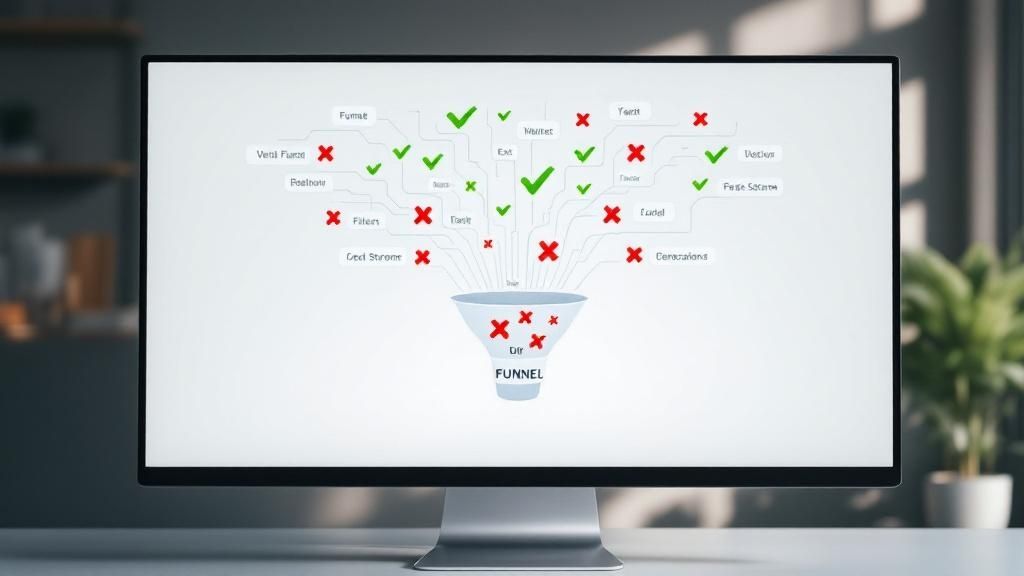
Picture the internet as a massive, sprawling city. Some neighborhoods are safe and productive, while others you’d want to avoid, especially after dark. Content filtering acts as your personal GPS and security detail, steering you away from dangerous areas and keeping unwanted elements out.
The whole point is to create a safer and more focused online space. By automatically enforcing the rules of the road, it protects users from stumbling into everything from inappropriate content to outright malicious threats. And with online risks getting smarter every day, this kind of protection is no longer a "nice-to-have."
It's no surprise that the demand for these tools is exploding. The web content filtering market is on track to more than double, jumping from a projected US$ 4.87 billion in 2025 to US$ 11.25 billion by 2032. This isn't just a trend; it's a direct response to growing concerns from parents, schools, and businesses about online safety and cybersecurity.
What Does Content Filtering Actually Do?
When you boil it down, this technology really only does a few key things, but it does them very well. We can wrap these actions up in a simple table.
Core Functions of Content Filtering at a Glance
| Function | Description | Common Use Case |
|---|---|---|
| Block | Proactively denies access to specific sites, apps, or entire categories like gambling or social media. | Preventing employees from accessing distracting websites. |
| Allow | Creates a "safe list" of approved websites and blocks everything else that isn't on it. | School computers that only permit access to educational sites. |
| Monitor | Logs and reports on web activity without actively blocking it, giving visibility into user behavior. | A business tracking productivity or investigating a data leak. |
As you can see, each function serves a distinct purpose, from creating a completely locked-down environment to simply keeping an eye on things.
Whether you're a parent, a business owner, or just someone looking to clean up their own browsing habits, understanding these functions is the first step. For many people, the journey starts with a simple goal, like figuring out how to block adult websites on any device, to create a safer environment at home.
How Content Filtering Technology Actually Works
So, what’s really going on behind the scenes when a filter blocks a website? It's not just one thing. Think of content filtering as a digital security team, where different members use a variety of techniques to get the job done. These methods can be as simple as spotting a forbidden word or as sophisticated as using artificial intelligence to understand the true meaning of a page.
The most straightforward technique is keyword filtering. It’s essentially a search function that scans a webpage for words on a no-go list. If it finds a match, access denied. The problem is, it's a bit of a blunt instrument and can easily block harmless content just because a certain word appears.
Using Blacklists and Whitelists
A more organized and widely used approach is URL and domain filtering. This method relies on carefully managed lists to either permit or deny access.
It boils down to two simple strategies:
- Blacklists: These are your classic "do not enter" signs. They contain a list of known problematic websites and domains that are blocked outright.
- Whitelists: This is the opposite—a VIP list. A whitelist contains only approved websites, and the filter blocks everything else.
This list-based system is incredibly effective, especially for known threats. In fact, a version of this called DNS filtering, which blocks entire domains at the network level, is a major player in the web filtering market because it’s so efficient and scalable.
The Rise of AI and Contextual Analysis
But what about new or cleverly disguised content? That's where the most advanced systems come in, using AI-powered contextual analysis. While older methods just see words or web addresses, AI can understand meaning and intent.
Think of it like a security guard who doesn't just read a sign, but understands the tone, subtext, and situation.
This technology goes way beyond just looking for keywords. AI analyzes everything on the page—text, images, even metadata—to figure out the actual topic and sentiment. It’s smart enough to tell the difference between a medical diagram and explicit adult material, a distinction that a simple keyword filter would almost certainly get wrong.
This kind of intelligence is a game-changer. It allows filters to catch subtle threats like nuanced hate speech or harmful imagery that don't use obvious trigger words. This is the technology that powers the most effective tools today, creating a truly smart and responsive safety net online. To see some of these in action, take a look at our review of the top 12 adult website blockers you should know.
Where You Will Find Content Filtering in Action
Content filtering isn't some obscure corporate tool; it’s working behind the scenes in more places than you might think. From your local library's public computers to the smartphone in your kid's backpack, this digital gatekeeper is constantly shaping what we can—and can't—see online.
This technology has become a quiet, yet essential, part of our digital lives. Its growth isn't surprising, really. It’s a direct response to a mix of government rules, compliance headaches, and the ever-present threat of cyberattacks. Add in the reality of "Bring Your Own Device" policies at work and a general explosion in internet use, and you can see why the global web filtering market is booming.
In Educational Institutions
Schools are a classic example of content filtering at work. They have a massive responsibility—both legally and ethically—to keep students safe from the rougher corners of the internet.
Here’s how they put it to use:
- Meeting legal standards like the Children's Internet Protection Act (CIPA).
- Blocking access to adult content, time-sucking social media sites, and online games during school hours.
- Shielding students from cyberbullying and other online threats to keep the focus on learning.
The goal is to make the internet a powerful educational resource, not a source of distraction or danger.
By carefully curating the digital classroom, schools can leverage the best of online learning while protecting students from its inherent risks.
Inside Modern Businesses
In the business world, content filtering is all about security and productivity. Companies rely on it to protect their networks and keep employees on task. For starters, it’s a frontline defense against malware and ransomware, blocking access to shady websites that could infect the entire company network.
It also helps enforce company policy. By blocking non-work sites like streaming services or online shopping platforms, businesses can cut down on distractions and keep productivity high. Of course, for adult entertainment fans looking for reputable platforms, a curated guide is a much safer bet. We’ve put together a list of the top 7 cam site reviews to help navigate that space safely.
At Home with Parental Controls
The most personal use case for content filtering is right in our own homes. Think about it: most modern routers, operating systems, and even individual apps come loaded with parental controls. This is content filtering in its most direct form.
Parents use these tools every day to:
- Block adult websites and lock down mature content on services like Netflix or YouTube.
- Set time limits on how long kids can use certain apps or devices.
- Keep an eye on browsing history to make sure their kids are staying safe online.
These controls give families the power to set digital boundaries that fit their own values.
Comparing the Different Content Filtering Methods
When it comes to content filtering, one size definitely does not fit all. The right approach for you boils down to your specific goals. Are you looking for simple, broad-stroke blocking, or do you need a more sophisticated system that understands nuance? Each method has its own give-and-take, forcing a trade-off between precision, cost, and complexity.
Think of it like this: a basic keyword filter is a bit like a nightclub bouncer with a very short, specific list of forbidden words. It's straightforward and quick, but it's also clumsy. It might block a biology article just for using a clinical term that happens to be on its list. On the other hand, a modern AI-powered filter is more like a seasoned security expert who can read the room, understand context, and interpret intent. The difference in accuracy is night and day.
Breaking Down the Trade-Offs
To land on the right solution, you have to weigh the pros and cons honestly. A simple URL blacklist might be perfectly fine for a small office that just wants to block a handful of distracting social media sites. But that same tool would be completely useless for a school district trying to protect thousands of students from the vast, ever-changing internet.
This is where AI really shines. It offers a far higher level of protection, but that sophistication often comes with a higher price tag and a more involved setup process.
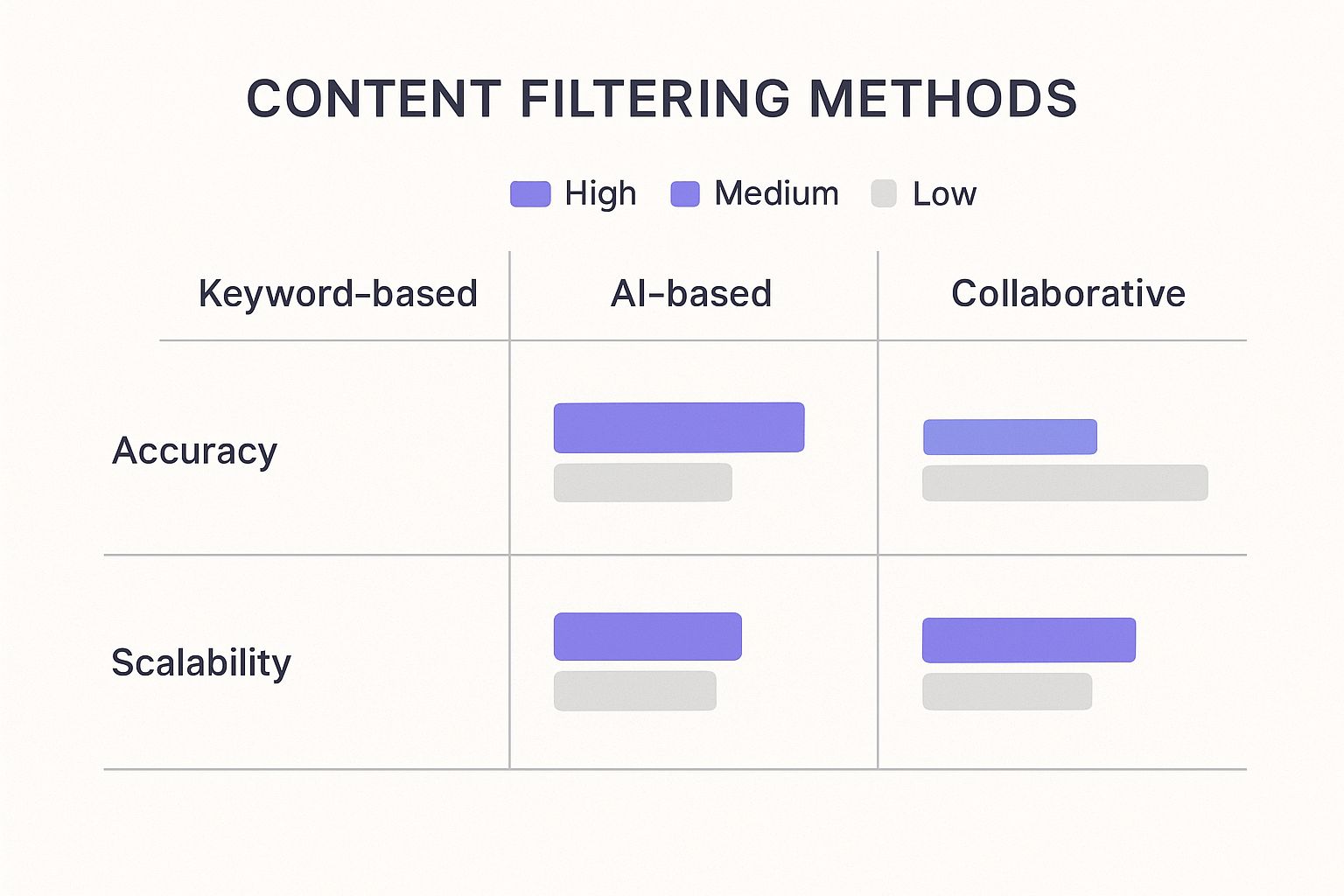
As you can see, AI-based systems are the clear front-runners when it comes to both accuracy and the ability to handle massive amounts of content, making them the go-to for complex and demanding environments.
A Side-by-Side Look at Filtering Techniques
So, how do these different methods actually stack up against each other in the real world? This table lays out the practical differences to help you see which tool is right for which job.
Comparison of Content Filtering Techniques
| Method | Pros | Cons | Best For |
|---|---|---|---|
| Keyword Filtering | Simple to set up and very inexpensive. | Highly inaccurate; prone to blocking legitimate content (false positives) and missing inappropriate content that doesn't use specific keywords. | Basic, non-critical situations where you need to block a very small, specific set of words. |
| URL/DNS Filtering | Effective at blocking entire websites that are known to be problematic. Relatively low-cost. | Can't filter content within an allowed site. Useless against new or unknown malicious sites until they are added to the list. | General security and productivity in corporate settings to block known-bad or distracting websites. |
| AI Content Analysis | Extremely accurate because it understands context, images, and video. Adapts to new threats automatically. | Higher cost and more complex to implement and manage. Requires more processing power. | Platforms with user-generated content, schools, and any environment needing high-precision, context-aware filtering. |
Ultimately, the choice comes down to your specific needs. While the simpler methods can work in a pinch, AI-driven analysis is now the gold standard for anyone who can't afford mistakes.
The takeaway is clear: this advanced understanding of content is absolutely crucial for platforms where content discovery must be both safe and relevant. We dig into this very challenge in our guide on how to search in OnlyFans with easy methods. The best tool is the one that strikes the right balance of protection and user freedom for your unique situation.
Implementing Content Filtering the Right Way

Knowing what content filtering is and actually putting it to work are two different things. A truly effective setup isn't just about plugging in the right software; it’s about striking a careful balance between safety, trust, and transparency.
Your first move should always be to create a clear, written policy. This document is your rulebook—it needs to spell out exactly what you're filtering, the reasons behind it, and what's expected of everyone involved. A solid policy eliminates any guesswork and creates a standard that's easy to follow.
With your policy in hand, the next step is communication. Whether you’re explaining new network rules to employees or setting up parental controls with your family, openness is everything. Focus on the "why," framing the filters as a tool for safety and focus, not just for control.
A filtering strategy that feels like a secret surveillance program is destined to fail. Transparency fosters cooperation and helps users understand that the goal is to create a safer digital environment, not to spy on them.
Keeping Your Filtering Strategy Effective
The internet changes by the second, and your filtering rules need to keep up. New websites and potential threats pop up constantly, so a "set it and forget it" mindset just isn't going to cut it for long-term protection.
To keep your system fair and functional, stick to a few best practices:
- Schedule Regular Reviews: Put a reminder on your calendar—maybe quarterly or twice a year—to go over your filter settings, blacklists, and whitelists.
- Establish an Appeals Process: Give people a straightforward way to request access if a site they need is blocked. This shows you're willing to be flexible and fair.
- Stay Informed on New Threats: Keep an eye on cybersecurity news to get ahead of emerging risks that might need a new filtering rule.
At the end of the day, it's all about finding a balanced approach. Platforms that nail user-generated content management often do so by watching what works for others. You can see how different platforms handle this by checking out our deep dive into OnlyFans vs competitors.
Got Questions About Content Filtering? We've Got Answers.
As you start to wrap your head around content filtering, a few practical questions always seem to pop up. Let's dig into some of the most common ones to give you a better feel for how this tech works out in the wild.
Can Filters Actually Block Encrypted HTTPS Traffic?
They sure can, but it takes a special trick. Since most of the web runs on encrypted HTTPS now, a simple filter is essentially blind. It can’t read the data passing through.
To solve this, more advanced filters use something called SSL inspection. Think of the filter as a security checkpoint. It briefly decrypts the traffic to inspect its contents against the rules, and then re-encrypts it before sending it on its way. This clever step lets it spot and block unwanted content even if it's hiding inside a secure connection.
How Do People Get Around Content Filters?
When someone really wants to bypass a filter, their first move is often to fire up a Virtual Private Network (VPN) or a proxy server. These tools basically create a secret, encrypted tunnel for their internet traffic, making it invisible to the filter and allowing them to slip right past.
But the game of cat-and-mouse is always evolving. Newer filtering systems are getting much better at spotting the tell-tale signs of VPN and proxy traffic, allowing them to shut down that escape route.
Ultimately, stopping bypasses requires a multi-layered defense. That means actively blocking known proxy websites and deploying filters smart enough to identify and cut off VPN connections, ensuring your digital safety rules stick.
Does Content Filtering Make the Internet Slower?
It can, but it really depends on the technology you're using. If you're picturing an old-school hardware box plugged into your server room, then yes, that can definitely create a bottleneck and slow everyone down.
Modern cloud-based or DNS filters are a completely different story. They are built for speed. Because all the intensive work happens in the cloud, the impact on your local network is usually so small you'd never even notice it. For most people today, a good content filter won’t cause any frustrating lag.
At Fanclan, we help you navigate the world of adult entertainment safely and efficiently. Discover, compare, and connect with your favorite models all in one place. Explore over 100,000 profiles with powerful search tools at https://fanclan.io.