

So, what exactly is digital content creation? In a nutshell, it’s the art and science of making stuff for the internet. We're talking about modern-day storytelling, where creators use everything from keyboards and cameras to microphones to connect with people online—whether that's to teach them something new, make them laugh, spark an idea, or convince them to take action.
What Digital Content Creation Really Means

This isn't just about randomly posting things online. Real digital content creation is a strategic game. Every single piece—a blog post, a TikTok video, a podcast episode, you name it—is crafted with a specific audience and a clear goal in mind. It's the fuel that powers websites, builds thriving online communities, and drives almost all modern marketing.
What really sets digital content apart from old-school media like TV or print is that it's alive. It’s a two-way street. People can comment, share, and like, turning a one-sided broadcast into a genuine conversation. This back-and-forth is pure gold for building real relationships and earning trust with your audience.
The Purpose Behind Every Piece of Content
Every great piece of content starts with a "why." Without a clear purpose, you're just adding to the noise. Figuring out your objective is the absolute first step to creating something that actually resonates with people and gets you the results you want.
Most content goals boil down to one of four core missions. Each one plays a unique role in guiding your audience.
Let's break them down.
| The Four Core Goals of Content Creation |
| :--- | :--- | :--- |
| Goal | What It Does | Common Formats |
| Inform | Educates the audience, answers their burning questions, and solves their problems with valuable information. | How-to guides, tutorials, industry news, explainer videos. |
| Entertain | Grabs attention and creates enjoyment, making your brand feel more human and relatable. | Memes, viral videos, quizzes, funny social media posts. |
| Inspire | Triggers an emotional response by sharing powerful stories, motivational quotes, or user-generated content. | Success stories, case studies, behind-the-scenes content. |
| Persuade | Guides the audience toward a specific action, like signing up for a list or making a purchase. | Product reviews, testimonials, sales pages, webinars. |
When you know which of these four goals you're aiming for, your content instantly becomes more focused and effective.
Aligning every blog post, video, or graphic with one of these core objectives is what separates the pros from the amateurs. This purpose-driven mindset turns random content drops into a smart, cohesive strategy that builds a loyal audience and crushes your bigger business goals.
The Three Pillars of Modern Content Creation
Great digital content doesn't just happen by accident. Hitting "publish" is the easy part. The real work is a complete system built on three core pillars that have to work together.
Think of it like a pro chef making a world-class meal. They need a solid recipe (Strategy), the skills to actually cook the food (Creation), and a way to get it to hungry customers (Distribution). Miss any one of those steps, and the whole thing falls apart.
Your content creation process is no different. It’s an ecosystem where Strategy, Creation, and Distribution all rely on each other. If you can get these three pillars to work in harmony, you'll create content that actually gets results.
Pillar 1 The Strategy
This is your game plan—the "why" behind every piece of content you create. Before you write a single word or hit record, you need a crystal-clear strategy. This is the planning phase where you figure out exactly who you're talking to and what you want to achieve.
A solid strategy boils down to two key questions:
- Who is your audience? Get specific. What are their problems? What do they care about? What keeps them up at night? Building a detailed audience persona helps you create stuff that actually resonates.
- What are your goals? Are you trying to get more eyes on your brand, capture leads, or directly drive sales? Every blog post, video, or tweet needs a specific, measurable goal that lines up with your bigger business objectives.
Without a strategy, you're just making noise and hoping someone listens. A good plan is your blueprint, guiding every single decision you make from here on out.
A great strategy is the difference between shouting into an empty room and having a real conversation with the people who matter most. It makes sure your content is a clear signal, not just more digital static.
Pillar 2 The Creation
Okay, you've got your blueprint. Now it's time to build. The creation pillar is where your ideas become something real that people can see, read, or watch. This is the hands-on part where you actually produce the content.
This phase is all about execution and skill. It involves:
- Writing and Editing: Nailing down sharp, persuasive copy that’s easy for people to read and optimized for search engines to find.
- Visual Design: Creating eye-catching graphics, images, and videos that stop the scroll and get your message across instantly.
- Video and Audio Production: Recording and editing multimedia content that tells a compelling story and keeps viewers hooked.
The quality of your content is a direct reflection of your brand. Polished, professional work builds trust. Sloppy, low-effort content sends people running. As you're putting yourself out there, also remember to keep your own digital life secure. You can learn more about how to protect privacy online essential tips tricks to stay safe.
Pillar 3 The Distribution
You’ve created a masterpiece. Awesome. But the job isn't finished. The final pillar, distribution, is all about getting your content in front of the right eyeballs. Even the most amazing video is useless if nobody ever sees it.
Smart distribution means you can't just post something on your website and cross your fingers. You have to actively push your content out to the channels where your audience is already hanging out.
Your key distribution channels should include:
- Search Engine Optimization (SEO): Getting your content to rank high on Google so you can capture traffic from people actively searching for what you offer.
- Social Media: Pushing your content out on platforms like Instagram, X, LinkedIn, or Facebook to spark conversations and drive traffic back to your site.
- Email Marketing: Dropping your content directly into your subscribers' inboxes to build relationships and stay on their radar.
Each pillar is non-negotiable. A killer strategy with sloppy creation is a waste. Brilliant content with zero distribution is invisible. You only start seeing real, impactful results when Strategy, Creation, and Distribution are all firing on all cylinders.
Choosing the Right Content Format for Your Goals

Alright, you've got the basics down. Now for the fun part: picking the right vehicle for your message. Think of content formats like a musician choosing an instrument. A violin and an electric guitar can play the exact same note, but the feeling they create—and the crowd they attract—couldn't be more different.
Not all formats are created equal. Your choice has a massive impact on how your audience connects with your work, how much time you'll spend creating it, and where it will actually get seen. A punchy TikTok video is perfect for grabbing attention, but it won't build the deep authority that a well-researched article can.
Matching your format to your goals is everything. Get this right, and you'll avoid wasting time creating a podcast for an audience that loves to read or a detailed ebook for a platform that only rewards short, snappy visuals.
Written Content: The Foundation of Authority
Written content—think blog posts, articles, and guides—is the bedrock of building digital authority. It's your chance to go deep on a topic, answer complex questions, and cement yourself as a go-to expert. Plus, it's a powerhouse for Search Engine Optimization (SEO), giving search engines tons of juicy text to crawl and rank.
- Blog Posts and Articles: These are your workhorses for educating your audience, sharing industry news, and pulling in consistent organic traffic. They're perfect for answering the specific questions your audience is typing into Google.
- Ebooks and Whitepapers: These are your heavy hitters. As long-form, high-value assets, they're often used to generate leads and signal serious expertise. Save these for audiences hunting for comprehensive solutions to their biggest problems.
Visual Content: The Ultimate Scroll-Stopper
In a world of infinite scrolling, visuals are your secret weapon. Eye-catching infographics, high-quality photos, and slick graphics cut through the noise and make complex information easy to digest and share. It's not just a feeling; blog posts with images get way more traffic than those without.
The human brain processes images 60,000 times faster than text. This makes visual content one of the most powerful tools for making an instant impact and building a brand identity that sticks.
Whether it’s a stunning photo on Instagram or an infographic that simplifies dense data, strong visuals grab attention and make your message memorable. They aren't just decoration; they're a core part of effective communication today.
The great news? Creating professional-looking visuals is easier than ever. The United States market for digital content creation tools is exploding, with the tools segment alone making up 73.55% of the revenue share, according to Grandview Research. This growth is all thanks to creators and audiences demanding more engaging content.
Tools like Canva have completely changed the game, offering thousands of templates that let anyone create polished graphics without needing a design degree.
Video and Audio Content: Forging a Personal Connection
When it comes to building a genuine, personal connection with your audience, nothing beats video and audio. These formats let people see your face, hear your voice, and feel your personality, creating a level of trust that text alone just can't match.
- Short-Form Video (Reels, TikToks, Shorts): Perfect for high-energy entertainment, quick tips, and showing off your brand's personality. Their viral potential is off the charts, making them incredible for reaching new audiences fast. Of course, the message is just as important as the medium—get some inspiration by checking out these top OnlyFans caption ideas to boost engagement.
- Long-Form Video (YouTube): This is your platform for in-depth tutorials, product demos, and deep-dive educational content. Don't forget, YouTube is the world's second-largest search engine, making it a discovery goldmine.
- Podcasts: Ideal for reaching busy people who consume content on the go—during their commute, at the gym, or while multitasking. Podcasts build an incredibly intimate connection, often making listeners feel like they're part of a private conversation.
To help you decide, let's break down the most common formats. This table compares them based on the effort required, their engagement potential, and where they shine brightest, helping you make a more strategic choice.
A Comparative Guide to Content Formats
| Content Format | Primary Goal | Effort Level (Low/Med/High) | Best Platforms |
|---|---|---|---|
| Blog Posts | Educate & Drive SEO | Medium | Website, Medium, LinkedIn |
| Short-Form Video | Entertain & Grow Reach | Medium | TikTok, Instagram Reels, YouTube Shorts |
| Long-Form Video | Teach & Build Trust | High | YouTube, Vimeo, Website |
| Podcasts | Connect & Build Loyalty | Medium | Spotify, Apple Podcasts, Google Podcasts |
| Infographics | Simplify Data & Boost Shares | Medium | Pinterest, LinkedIn, Blog Posts |
| Ebooks/Whitepapers | Generate Leads & Show Expertise | High | Website (via landing page) |
Ultimately, the best creators don't just stick to one format. They mix and match, repurposing a single idea into a blog post, a series of TikToks, an infographic, and maybe even a podcast episode. This way, you meet your audience where they are, in the format they love most.
Your Step-by-Step Content Creation Workflow
Trying to turn a fresh idea into a finished piece of content can feel like a total mess. If you don't have a solid process, it's way too easy to get sidetracked, skip crucial steps, or just burn out completely. A good workflow is your secret weapon—it organizes the chaos and makes sure your effort leads to high-quality results, every single time.
Think about it like building a house. You wouldn't just grab a hammer and start nailing boards together randomly. You need a blueprint, a foundation, a construction plan, and finishing touches before you can open the doors. Content creation works the same way.
We've broken down the entire journey into five clear, manageable phases. Follow this roadmap, and you'll stay organized, create better work, and get your content in front of the right people.
This simple visual breaks down the core journey from a spark of an idea to getting it out there.
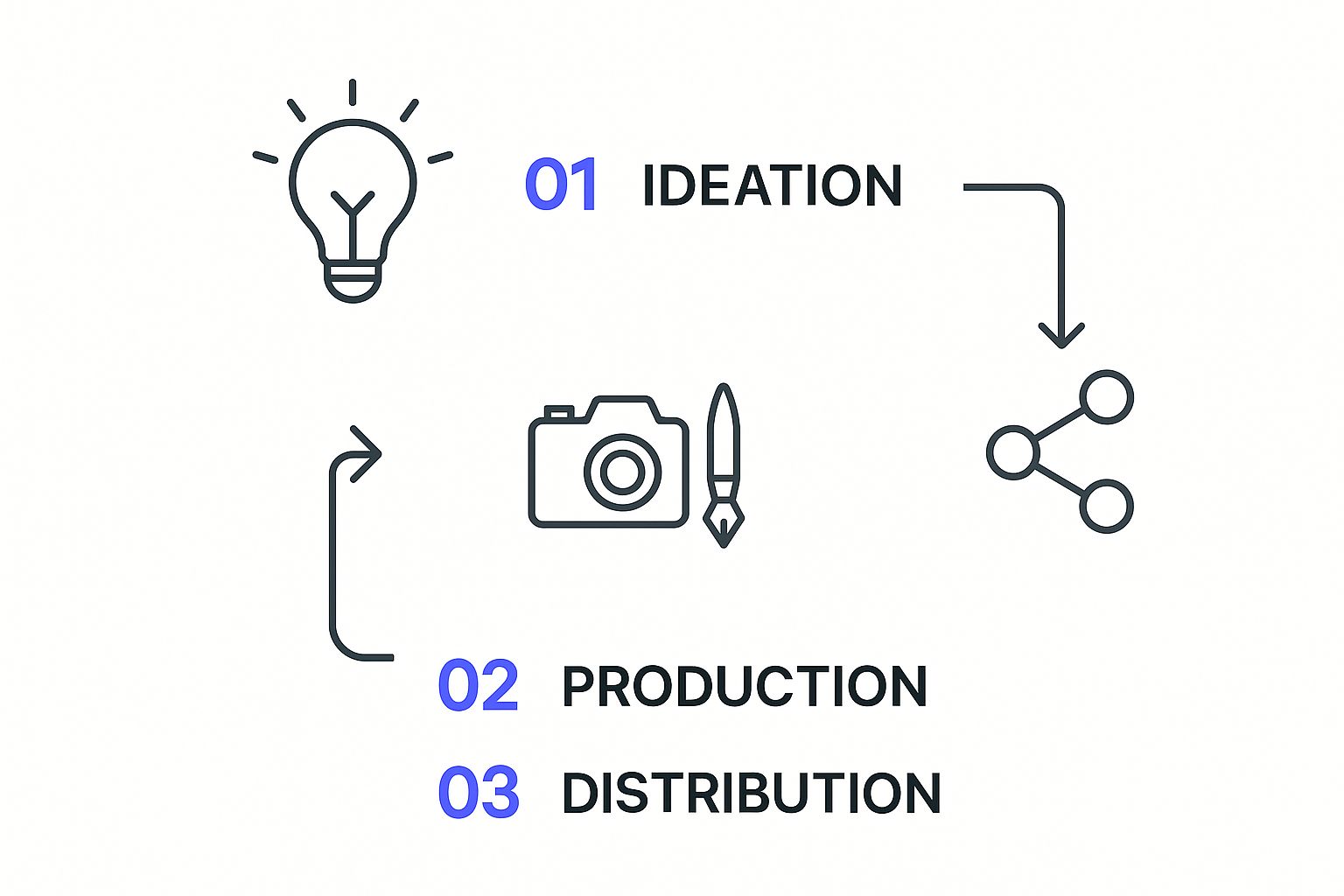
You can see how each step builds on the one before it, turning a simple thought into a real asset that's ready for your audience.
Phase 1: Ideation and Validation
This is where it all begins—the blueprint phase. Coming up with ideas is more than just random brainstorming; it's about finding topics that actually resonate with your audience and support your goals. The best way to start? Listen. What are people asking? What problems do they need solved?
Once you have a list of ideas, you have to make sure they're actually any good. Ask yourself:
- Does anyone care about this? Use keyword research tools to see if people are searching for your topic.
- Do I actually know what I'm talking about? The best content comes from genuine knowledge and passion.
- Can I say something new? Don't just rehash what's already out there. Find a unique angle that makes your content worth someone's time.
Phase 2: Planning and Structuring
Okay, you've got a killer idea. Now it's time to lay the foundation. The planning phase is where you create a detailed outline, mapping out the structure, key points, and overall flow. A solid plan is your best defense against rambling and ensures your message is clear and convincing.
This is also when you pick the right format. Is this idea best as a deep-dive blog post, a quick video tutorial, or a shareable infographic? Your outline should break down everything from the hook in the intro to the final call to action.
Phase 3: Production and Creation
Let's get to work. This is the construction phase—the actual writing, filming, recording, or designing. This is where your creative skills shine. With your outline as your guide, you bring the concept to life. The trick here is to just create. Get the first draft done without worrying about making it perfect.
Focus on creating, not critiquing. The goal here is to get your ideas out. You'll have plenty of time to polish and perfect everything later.
For creators in very specific niches, this stage is all about knowing the platform's rules. If you need tips for a particular platform, our guide on how to set up an OnlyFans account and get started offers some great platform-specific advice.
Phase 4: Refining and Polishing
Welcome to the finishing touches. The main structure is built, but now you need to add the polish that makes it look professional. This is all about editing, proofreading, and optimizing your work for whatever platform it's going on.
Don't skip this part. It includes:
- Editing for Clarity and Flow: Tighten up your sentences, kill the jargon, and make sure your points are easy to follow.
- Proofreading for Errors: Hunt down any spelling, grammar, or punctuation mistakes. Small errors can kill your credibility.
- Optimizing for the Platform: Add keywords for SEO, format the text so it's easy to read, and create visuals that grab attention.
Phase 5: Publishing and Distribution
It's time for the grand opening. Hitting "publish" isn't the end—it's the beginning. Once your content is live, you need to get it in front of people. Share it on your social media, blast it out to your email list, and jump into the comments to get a conversation started.
How Content Creation Fuels Business Growth

Let's get one thing straight: content creation isn't just a side hustle or a creative outlet anymore. It’s the engine that powers modern business growth. When you get strategic about what digital content creation is, it becomes the answer to building a brand, pulling in customers, and making money. It’s how you connect what your audience desperately needs with what you’re selling.
Think of your content as your best salesperson—one that works 24/7 without a break. A smart blog post answers a customer’s questions in the middle of the night. A killer video builds a connection over the weekend. A quick social media update keeps you on their mind. This constant delivery of value is what turns casual followers into loyal fans.
Building Unshakeable Brand Authority
In a world overflowing with options, trust is everything. High-quality content is the fastest way to earn it. When you consistently put out helpful, well-researched, and genuinely insightful material, you stop being just another brand and start becoming the go-to expert.
Having that authority makes everything else easier. People who see you as a credible source are way more likely to buy from you, recommend you to their friends, and stick around for the long haul.
For example, a B2B software company that drops detailed whitepapers and case studies isn't just sharing info; it's proving it knows its stuff. That builds massive confidence with potential clients before they ever even think about a sales call. This is the real power of smart digital content creation.
Boosting Your Visibility with SEO
How do new customers find you? Most of the time, it’s through a Google search. Search Engine Optimization (SEO) is the name of the game, and every single blog post, guide, or video you create is another chance to show up when your ideal customer is looking for answers.
The more quality content you have, the more pages Google can index. This sends a clear signal that your site is a valuable resource worth showing to people.
A strong content strategy is the absolute foundation of modern SEO. Each piece you create acts like a digital beacon, attracting organic traffic from users actively seeking solutions—traffic that can convert into leads and sales for years to come.
This isn’t just about getting clicks; it’s about getting the right clicks. By creating content that hits your audience’s specific pain points, you pull in qualified visitors who are actually interested in what you have to offer.
Generating and Nurturing Qualified Leads
Content is a lead-generating machine. Offer something valuable—like an ebook, a webinar, or a cool template—in exchange for an email address. Just like that, you’re building a list of potential customers who have already raised their hand to say they’re interested.
This is where you shift from just shouting your message out to actually building relationships.
Once you have those leads, your content keeps working for you through email marketing. You can send them relevant articles, exclusive tips, and helpful videos to guide them toward a sale without being pushy. This is the exact strategy countless creators use to build massive incomes, which is why it's worth checking out the average income of creators on popular platforms.
This whole ecosystem is driving a huge economic shift. The global entertainment and media industry, powered by digital content, has exploded to $2.9 trillion, with digital formats accounting for 72% of all advertising revenue. The numbers don't lie—there’s immense financial power in a smart content strategy. You can see the full breakdown in PwC's comprehensive industry outlook.
The Future of Digital Content Creation
The world of digital content is anything but static. It's constantly being reshaped by new tech that changes the game for how we create, personalize, and distribute our work. What works today might be obsolete tomorrow.
To stay relevant and keep your content from getting lost in the noise, you have to keep one eye on what’s coming next. This isn’t just about being trendy—it’s about future-proofing your entire strategy.
Leading the charge is Artificial Intelligence (AI). AI isn't some far-off sci-fi concept anymore; it's a real tool that creators are using right now to completely overhaul their workflows. Think of it as a creative co-pilot.
AI can help you hammer out first drafts, brainstorm killer headlines, and dig into performance data to find insights you’d otherwise miss. It’s what allows a one-person shop to scale up their output and compete with massive teams.
AI and Immersive Experiences Are the New Frontier
But AI is just the beginning. We’re also seeing a massive pivot toward content that pulls you in and makes you part of the experience. Audiences are tired of just sitting back and watching; they want to get involved.
This shift is driving a few key trends that you can’t ignore:
- Interactive Content: Things like quizzes, polls, and choose-your-own-adventure videos are becoming non-negotiable. They turn passive viewing into a real conversation, which skyrockets engagement and gives you valuable feedback.
- Immersive Realities (AR/VR): Augmented and Virtual Reality are breaking out of the gaming world and hitting the mainstream. Brands are already using AR filters on social media and building virtual showrooms to give customers a memorable, hands-on feel for their products.
- Short-Form Video's Total Domination: Platforms like TikTok and Instagram Reels have rewired our attention spans. If you can't tell a gripping story in 60 seconds or less, you're going to get left behind. It's a non-negotiable skill now.
The next five years will belong to the creators who can nail the mix of human creativity and smart technology. Success will mean knowing how to direct AI tools, build interactive worlds, and pack a powerful punch with short-form stories. That’s the new standard.
A Market Ready to Explode
This evolution isn't just happening on our screens; it's backed by serious money. The global digital content creation market is on a steep upward climb, fueled by the deep integration of AI and cloud-based tools into everything we do.
The market hit $30.6 billion in 2024, but that’s just the starting line. Projections show it rocketing to $38.9 billion by 2026.
By 2033, it’s on track to hit an incredible $90.4 billion, growing at a compound annual rate of nearly 12.8%. You can dive deeper into the digital content creation market trends on grandviewresearch.com. This isn't just a trend; it's a massive financial wave, and mastering these new skills is your ticket to riding it.
Common Questions About Digital Content Creation
Once you get the hang of the basics, you’ll naturally start running into some practical questions. Moving from theory to action always brings up the nitty-gritty details.
Let's clear up a few of the most common questions that pop up for creators just starting out.
Content Creation Versus Content Marketing
It's easy to mix these two up, but they play very different roles. The simplest way to think about it is like cooking a meal versus hosting a dinner party.
Content creation is the hands-on process of cooking the meal. It's you writing the blog post, filming the video, or designing that killer graphic. This is the tangible "what" that you produce.
Content marketing, on the other hand, is the entire dinner party. It’s the strategy behind why you made that specific meal, who you invited (your audience), and how you promoted the event (distribution) to make sure everyone had a great time and wants to come back.
Content creation gives you the asset. Content marketing gives that asset a purpose, a plan, and a path to the right people.
The Real Cost of Starting Content Creation
So, how much cash do you really need to get started? The honest answer is you can begin with a budget of exactly $0.
Seriously. Countless successful creators launched their entire brand using just a smartphone and free tools like Canva. Your most valuable investment in the beginning isn't money—it's your creativity and your time.
As you grow, you can always choose to reinvest in better gear or software, but a big budget is never a requirement for a great idea.
Measuring the Success of Your Content
How do you know if any of this is actually working? You have to measure your success, but that doesn't just mean chasing likes and views. The best approach is to track metrics that tie directly back to your original goals.
Here are the key metrics that really matter:
- Engagement Rate: Are people commenting, sharing, and saving your posts? This shows your content is actually connecting with them on a deeper level.
- Website Traffic: Is your content driving people back to your main site or landing page? Check your analytics to see which pieces are sending the most traffic your way.
- Conversion Rate: This is the big one. How many people are taking the action you wanted them to take, like signing up for your email list or buying a product?
Tracking these numbers gives you a clear roadmap. You'll see what's resonating, what's falling flat, and where you should put your energy next. And remember, part of a successful creator business is keeping your audience safe; you can learn more about how to avoid online scams and protect your data in our detailed guide.
Ready to discover your next favorite creator? With over 104,000 profiles, Fanclan is the ultimate search platform for finding models that match your exact interests. Explore top deals, niche categories, and connect with creators today. Find exactly what you're looking for at https://fanclan.io.